What are vampire devices?
Author: E.ON Next
Reading Time: 3 mins
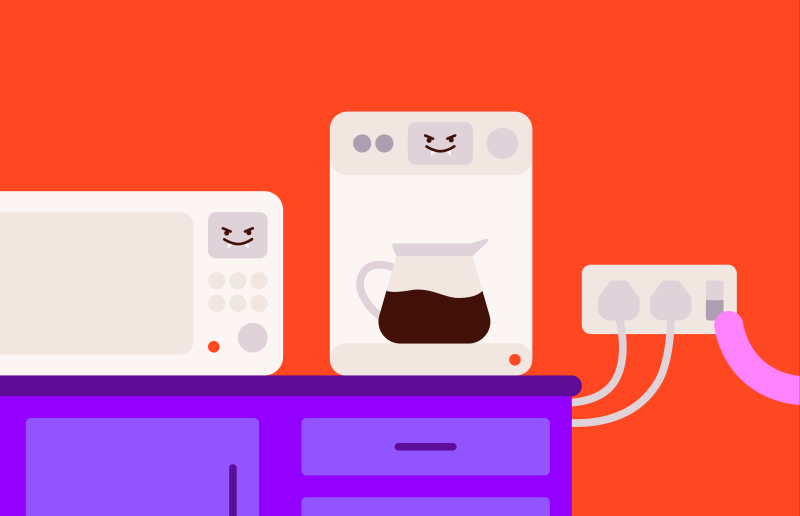
A so-called ‘vampire device’, also sometimes called a phantom device, is any device or appliance that continues to use energy whilst not in use. This invisible energy use is easy to overlook, but it can add up on your energy bills.
Don’t worry, vampire devices can be defeated - and it won’t involve any garlic.
Save energy by turning off at the plug.
In the UK, the average household spends around £65 a year powering devices left on standby¹.
To avoid wasting energy whilst your devices are not being used, you can either turn them off at the plug socket or unplug them. This will prevent the device from using any electricity at all – saving you money on your bill.
How to save energy with hard to reach plugs.
Many of us have plug sockets in difficult to reach places, behind furniture or hidden by large appliances. Instead of rearranging the room every time you’re ready to switch off the plug, you could try investing in Smart plugs.
Smart plugs connect to your internet so that you can control the plug from an app on your phone. They provide all the convenience of a TV remote but they fully turn off your device, rather than putting it on standby. Some models may even let you schedule times to turn the device off automatically, such as overnight or whilst you are at work.
To use a Smart plug, you simply plug it into the wall socket and then you plug your device into the Smart plug.
Whilst Smart plugs are technically vampire devices themselves, they only require a small amount of power to run. They are generally highly energy efficient, so they could still save you electricity – especially when paired with your more energy intensive appliances.
Vampire devices that cannot be switched off.
Not all devices can be switched off. Appliances such as fridges, freezers, and Smart home devices need to be on all the time to do their job.
To help further reduce your energy use (and bills), opt for more energy efficient appliances when replacing your old ones. This will reduce your energy use whilst using your devices, but also the energy drain caused by them being on standby.
How to check the energy efficiency of appliances.
Check the appliance rating of your devices to find out how energy efficient they are - an A rating is the most energy efficient and G is the least. You can usually find the appliance rating on a sticker on the device itself or on the packaging.
Appliance ratings changed in 2021. Take a look at our simple guide to learn more about appliance ratings, and find out how the new ratings affect your old appliances.
By taking the simple action of switching off at the plug, you can help to reduce the energy drain of vampire devices and save money on your electricity bill. For more ideas on how to use less energy and lower your bills, see how many of our energy saving tips you can try at home.
Energy efficiency advice for your home.

Ready to get energy smart? This video is full of useful tips for more efficient energy use in your home.
From smart meters to draft excluders, there are plenty of simple measures we can take to make the most of our home energy.
Make your home smarter with a smart meter.
Switching to a smart meter means you can see exactly what you are spending on your energy in real time. Knowledge is power when it comes to powering your home, so take control of your energy use and make budgeting a cinch. Together we can reduce energy bills as well as carbon emissions. Find out how you can get a smart meter for your home.
Smart meter customers have their say.

See what our smart meter customers say about their experience with smart meters. Meet Elizabeth & David who call their smart meter a 'brain in a box' and they use it to better monitor how much they spend on their energy.
Citations
Published: 23/01/2023
Related Blogs
How to transform your property into a modern eco home?
Learn how you can turn your home into a sustainable eco house. Our blog offers insights for families seeking eco-friendly and energy efficient home tech.
Can your energy tariff help to lower your winter bills?
Explore winter energy tariffs that match your lifestyle and budget. Discover a range of E.ON Next energy tariffs to lower your energy costs in 2025
How to reduce gas bills: Moving from savings to independence
Tired of rising gas costs? Learn ways to save on UK energy bills, reducing gas usage to removing gas bill entirely with solar, battery storage & heat pump.

How half hourly settlement changed the energy market (and why it matters for your home).
Discover how mandatory half-hourly settlement is revolutionising the UK energy market. Learn how this change enables Next Optimise to automatically trade your solar battery for maximum savings.
When is the cheapest time to use your washing machine?
Want to cut down on your electricity bill? Learn the best off-peak times to run your washing machine and save on utility expenses effortlessly.
Related Blogs
How to transform your property into a modern eco home?
Learn how you can turn your home into a sustainable eco house. Our blog offers insights for families seeking eco-friendly and energy efficient home tech.
Can your energy tariff help to lower your winter bills?
Explore winter energy tariffs that match your lifestyle and budget. Discover a range of E.ON Next energy tariffs to lower your energy costs in 2025
How to reduce gas bills: Moving from savings to independence
Tired of rising gas costs? Learn ways to save on UK energy bills, reducing gas usage to removing gas bill entirely with solar, battery storage & heat pump.
How half hourly settlement changed the energy market (and why it matters for your home).
Discover how mandatory half-hourly settlement is revolutionising the UK energy market. Learn how this change enables Next Optimise to automatically trade your solar battery for maximum savings.
When is the cheapest time to use your washing machine?
Want to cut down on your electricity bill? Learn the best off-peak times to run your washing machine and save on utility expenses effortlessly.
Feel the Community power.
The E.ON Next Community is a space for customers to share experiences and offer advice. Find support or suggest your own energy topics, plus get involved in discussions on the latest energy news.

Recent Blogs
Compare electric vehicle tariffs: Next Drive Fixed vs Next Drive Smart.
Compare E.ON Next EV tariffs. Discover whether Next Drive Fixed (set timer) or Next Drive Smart (lowest off-peak rate + app automation) fits your home.
How to transform your property into a modern eco home?
Learn how you can turn your home into a sustainable eco house. Our blog offers insights for families seeking eco-friendly and energy efficient home tech.

E.ON completes acquisition of OVO.
No immediate change for customers of either business, with all tariffs and customer service channels unchanged.