Off grid battery systems: the smarter way to save and power up.
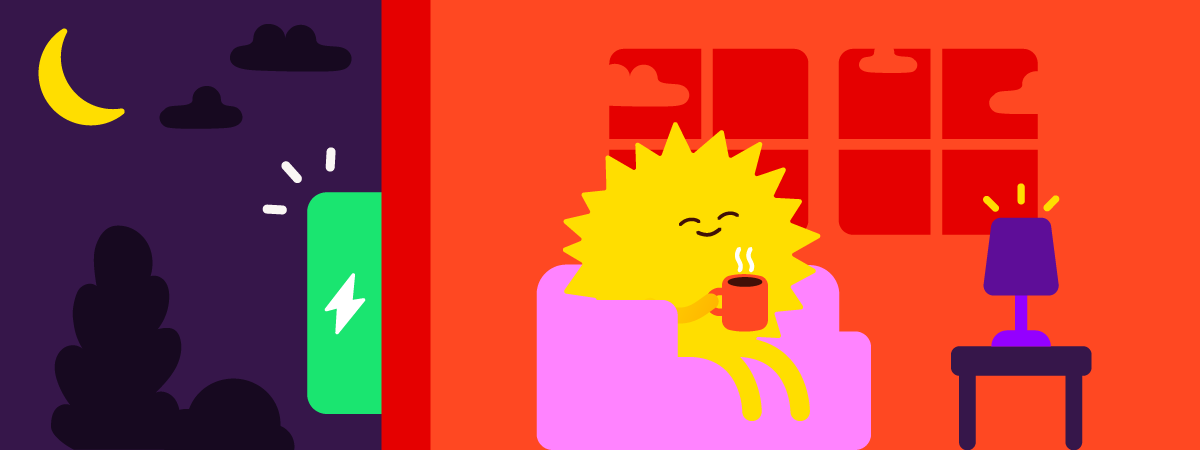
Author: E.ON Next
Reading Time: 7 mins
You've likely heard the phrase ‘off grid’. The idea of your home standing fully self reliant, unplugged from the local electricity network could be an appealing thought, especially with the UK's drive towards renewable power. However, for most of us, going truly off grid isn't just impractical, nine times out of ten, it’s unnecessary and expensive.
Could it be that complete energy independence isn’t what you’re after? This is where a modern home battery backup system comes in. A home battery – especially one tied to the grid – could offer peace of mind during a blackout and help you save on your energy bills. Let’s explore your options.
How do solar batteries work?
Solar panel batteries work by storing surplus energy produced throughout the day and releasing it for use whenever the sun isn’t shining.
There are two main battery types: lithium-ion and lead-acid. Both technologies are designed to withstand the cyclic charging and discharging needed for solar energy storage.
And if your home’s electricity demand is lower than what your solar panels are actually generating, the excess direct current (DC) electricity can be diverted to charge your battery. Pretty cool, right?
Learn more about how solar batteries work.
Is a full off grid solar system necessary?
The concept of a genuine, 100% solar off grid system is when your home generates all its electricity and stores it in an off grid battery system. It sounds great, but here’s the reality:
Larger battery bank: To get through the long British winter, which sees far less solar output, batteries for solar power storage in winter must store enough energy for several days of low sunlight use, meaning lots of space and a bigger investment needed.
More solar panels: You'd need a substantial solar panel array to charge that large battery bank in a realistic timeframe and to compensate for lower winter generation. Fast forward to the summer, and the battery is likely oversized – you’ll be wasting much of the generation on a sunny day.
Grid-forming inverter: If you’re not connected to the electricity grid, then you’ll need a specialist inverter with the ability to create the 50 Hz AC power supply for your home, rather than just following the oscillating voltage from the grid if it’s there.
Complex maintenance: Remember, you're responsible for the whole system’s safety and maintenance without the national grid to fall back on.
True off grid living is usually only practical for very rural locations where connecting to the national grid is expensive or impossible.
Try a home battery backup on the grid.
The clever, modern solution is a grid-tied home battery system, with a smart gateway added on. It gives you the two main things people want from an off grid setup: backup power and the possibility of lower bills.
See your battery as a top up reserve and a smart financial manager, not your whole power station. It works together with your electricity supplier and the National Grid, yet provides backup during an outage. Your battery can also be programmed to optimise your energy use by charging and discharging when electricity is cheapest.
Home battery backup could give you the winter advantage.
The last thing you want on a cold, dark winter evening is a power cut, often caused by storms. This is where the home battery backup really steps up.
Your battery, when paired with the smart gateway, acts as a clean, silent uninterruptible power supply if the grid goes down. During these situations, your battery kicks in automatically.
It helps you to keep the essentials running, like the heating, WiFi router, fridge/freezer, and perhaps most importantly, your lights (goodbye blackouts)!
Save with smart charging and an off-peak tariff.
A home battery isn't just a safety net for power cuts. Did you know it has the possibility to help you save? This is one of the benefits of a smart, grid-tied system paired with a time of use tariff, like our Next Smart Saver.
You can programme your battery to charge up automatically during the cheapest periods. On our Next Smart Saver tariff, the 'super off-peak' rate is between 2am and 5am. Plus, we have an 'off-peak' rate from 5am to 4pm and 7pm to 2am.
Your battery then automatically runs your home's electricity during the most expensive 'peak' period, which is typically 4pm to 7pm when everyone's coming home, cooking dinner, and generally using more energy.
By using your stored energy during off-peak and super off-peak hours, you could take advantage of the cheaper rates.1
What size off grid battery system is right for your home?
Working out what size battery you need for your home can seem complicated, but it needn’t be. It all comes down to how much energy you use and for how long you might want to power your home.
Over a year, the average UK household (a three bed house with two to three people) uses 2,700 kWh (kilowatt hours) of electricity. Learn more about the average UK energy bill. However, if you have an electric heating system like a heat pump, your daily use will likely be higher.
To figure out what you’ll need, first decide what you’ll keep running during a power cut. Would it just be the fridge, lights, and WiFi, or is the washing machine and oven also vital?
The best way to find out which battery size that’s right for your home is by getting a quote from us. You can discuss everything in detail with one of our experts, who can help you decide.
How long can my off grid battery system keep the power on?
When a power cut hits, the biggest question is around how much time you have. It depends on what you have running. If you switch on everything you own, the battery will drain faster. But if you only run the essentials, you’ll have more time.
Battery capacity and kilowatt hours.
A kilowatt hour, which you’ll see abbreviated to ‘kWh’, is the measure of the total stored energy in the battery. Our lithium-ion solar batteries start at 5.1 kWh. If you want full backup capability, one of our 13.5 kWh Tesla Powerwall 3 batteries will do the trick.
Calculating battery runtime.
Let’s first discuss the load (kW), aka, the power drawn by all the devices running in a moment. If you're only running a modern fridge/freezer and some LED lights, your total load is likely to be low, say 0.5kW.
However, if you switch on powerful appliances like a kettle or washing machine (drawing over 2kW), the runtime could plummet. The key here is to be mindful of your load when operating off the grid.
Please note: It's unlikely you’ll be able to power your electric shower through your battery system. Electric showers use around 9 kW on average, which is way over your battery’s output. The results could cause your system to trip.
What type of battery is best for solar storage?
The market for home batteries is led by lithium-ion technology, which has become the industry standard for home systems in the UK. Let’s take a look at the battery’s main features and advantages.
The benefits of an LFP battery.
We use lithium iron phosphate (LFP) battery chemistry – one of the safest types of lithium ion batteries. The great part is, LFP batteries can do more charge/discharge cycles and have a reduced risk of thermal runaway when compared to other lithium-ion batteries.
Battery longevity and warranty.
The average lifespan of a solar battery is around ten years, but of course, this varies depending on the type of battery, maintenance, and how much you use it.
LFP batteries generally have longer lifespans and a lower environmental impact compared to cobalt-based alternatives. Plus, all our battery systems come with a 10 year manufacturer’s warranty.
Understanding battery depth of discharge.
Depth of discharge (DoD) is the percentage of the battery’s total storage capacity that can be safely discharged at once. LFP batteries typically have a maximum DoD of around 80%, although some manufacturers oversize their batteries so they can deliver a full '100% DoD' output.
There’s also the possibility of programming your battery management system to limit the depth of discharge used, boosting the lifespan of your battery, while reducing the usable capacity.
Learn more about the pros and cons of solar batteries.
Ready to get smarter with your energy?
A grid-tied battery system is a smart reality for your UK home. It’s an investment that could back you up during power cuts and reduce your reliance on expensive peak-time electricity – especially when you pair it with our Next Smart Saver time of use tariff. Add a solar battery to your solar panels now, and reduce your reliance on the grid.
- 1. Next Smart Saver (E.ON Next, 2024)
Published: 11/12/2025
Related Blogs

Stack your storage savings: Get up to £1,000 off solar and battery or battery only packages.
Find out how you could get up to £1,000 off our solar and battery or battery only packages. Available for a limited time.
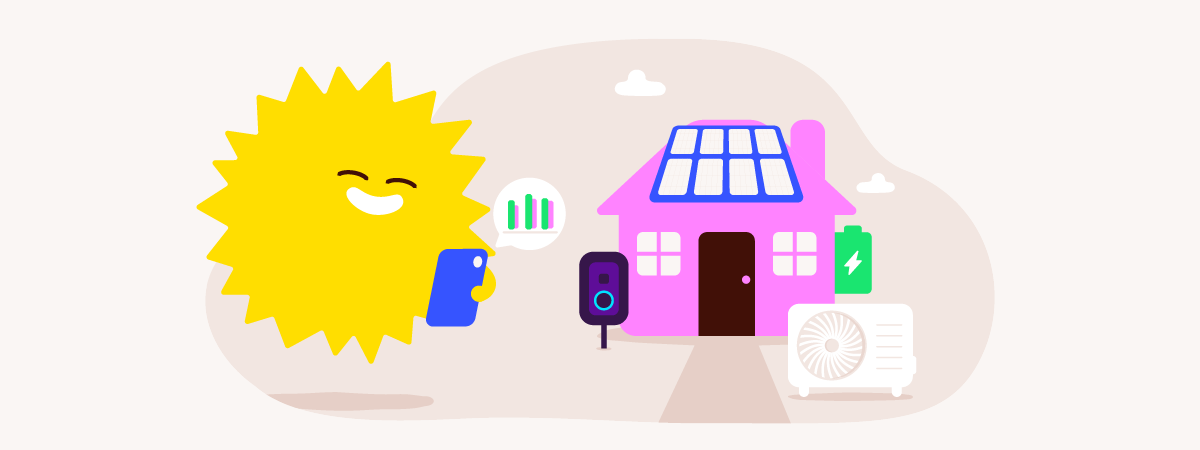
The home energy stack of 2030: How Next Optimise is building the foundation for your fully automated home energy system.
Discover the future of your home energy stack with E.ON Next Optimise. Learn how to build a fully automated energy system using your battery, solar, and EV.
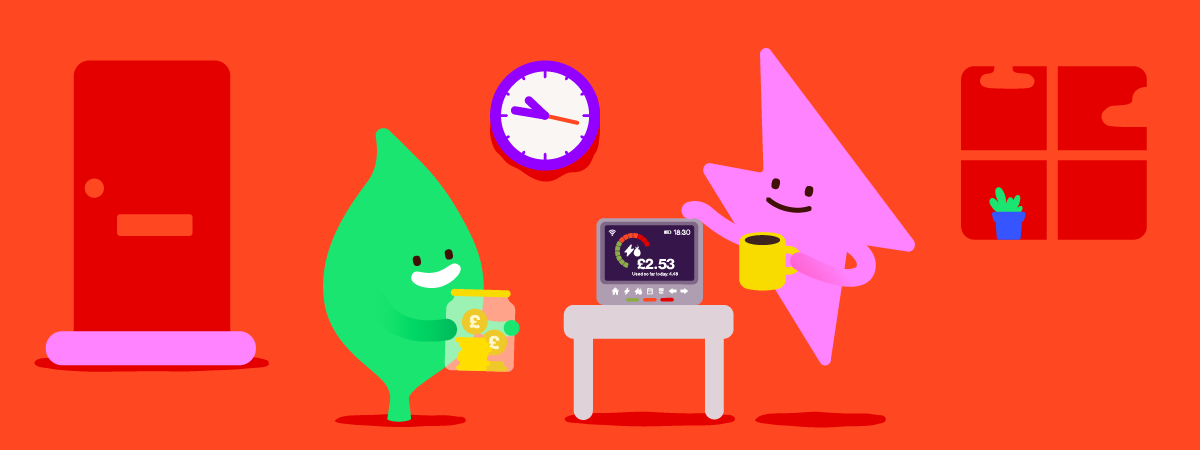
How half hourly settlement changed the energy market (and why it matters for your home).
Discover how mandatory half-hourly settlement is revolutionising the UK energy market. Learn how this change enables Next Optimise to automatically trade your solar battery for maximum savings.
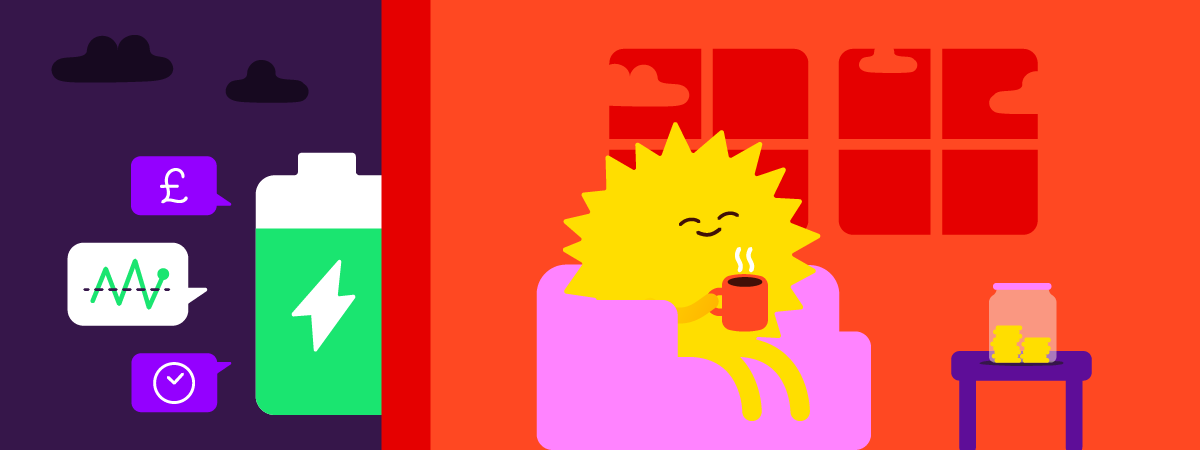
Relinquishing control: Why letting an algorithm run your battery is a smart move.
Manual home battery management misses opportunities. Next Optimise uses real-time prices & forecasts to charge, discharge, and export, saving households an average of £300/year.
The grid needs your battery more than you think.
Discover how your automated home battery is vital national infrastructure and how Next Optimise helps you earn more.
Related Blogs
Stack your storage savings: Get up to £1,000 off solar and battery or battery only packages.
Find out how you could get up to £1,000 off our solar and battery or battery only packages. Available for a limited time.
The home energy stack of 2030: How Next Optimise is building the foundation for your fully automated home energy system.
Discover the future of your home energy stack with E.ON Next Optimise. Learn how to build a fully automated energy system using your battery, solar, and EV.
How half hourly settlement changed the energy market (and why it matters for your home).
Discover how mandatory half-hourly settlement is revolutionising the UK energy market. Learn how this change enables Next Optimise to automatically trade your solar battery for maximum savings.
Relinquishing control: Why letting an algorithm run your battery is a smart move.
Manual home battery management misses opportunities. Next Optimise uses real-time prices & forecasts to charge, discharge, and export, saving households an average of £300/year.
The grid needs your battery more than you think.
Discover how your automated home battery is vital national infrastructure and how Next Optimise helps you earn more.
Recent Blogs
Stack your storage savings: Get up to £1,000 off solar and battery or battery only packages.
Find out how you could get up to £1,000 off our solar and battery or battery only packages. Available for a limited time.

Guaranteed warmth: How the E.ON Next 5-Year Performance guarantees your home.
Discover how our 5-Year Performance Guarantee protects your home. Plus, learn how pairing a heat pump with a smart tariff could save you up to £800 a year.
How to reduce gas bills: Moving from savings to independence
Tired of rising gas costs? Learn ways to save on UK energy bills, reducing gas usage to removing gas bill entirely with solar, battery storage & heat pump.