E.ON Next Solar Max pilot and what we learnt.

Author: Vito Cerabona
Reading Time: 9 mins
When it comes to energy at home, we know that most of us are looking for the exact same things. We want lower bills, less hassle, and a little bit more control over how we use our electricity.
If you already have solar panels and a home battery, you’re well on your way there. You’re generating your own electricity, which is a fantastic first step. But recently, we started asking a bigger question. We wondered what if your home could do even more with that energy, all automatically?
That’s exactly what our Next Solar Max pilot set out to explore, and it was the UK’s first combined intelligent home energy management service and dynamic electricity tariff, designed for households with a home battery and solar panels.
We wanted to see how we could help make your setup work harder for you. After testing it with customers across the UK, we have learnt a great deal about what works well, what matters most to people, and what we need to focus on next. Let us dig into the details and share the journey with you.
Understanding the basics of E.ON Next Solar Max.
In a nut shell, Next Solar Max was a dynamic solar tariff designed to optimise your solar panels and battery, by working with the market-linked energy rates.
Usually, homes sit on a fixed price for electricity, or maybe have one price during the day and a different price overnight. With Next Solar Max, the prices changed every 30 minutes based on the wholesale market. This means energy can be much lower at certain times of the day, and higher at others.
Here’s where the smart part kicks in. Next Solar Max used intelligent technology to seamlessly communicate with your system. It aimed to charge your battery when electricity is at its cheapest, also taking into account how much solar you might generate during the day. It then saved that energy for when prices go up, helping you avoid peak costs. Finally, it exported any spare energy you had back to the grid when it was worth more. Storing the sun when the day is done, and releasing it when it benefits you most.
The most exciting part is that it all happens automatically in the background. Rather than you having to constantly check apps, monitor battery charging rates, or guess the weather forecast, your home simply does the hard work for you. A little less guessing, and a lot more resting.
Why we decided to run this early rollout.
We see more and more households generating their own energy, which is a brilliant thing to witness. However, we noticed something quite important. Not everyone was getting the full value out of their setup.
Solar panels might be happily producing energy during the day, but without the right connected system, some of that potential value gently slips away. We saw instances where energy was being exported back to the grid when prices were low, or households were drawing from the grid when it was more expensive than it needed to be.
We wanted to help change that dynamic. The goal of our pilot was incredibly straightforward. We wanted to help customers use, store, and sell their energy at much smarter times, without adding any extra complexity to their daily lives.
What happened when our customers tried it.
We had the privilege of working with over 175 households for this pilot. Every single one of them already had solar panels and battery storage installed. Once they were connected, their systems started responding to dynamic prices automatically. We watched the data come in, and the results were really encouraging to see.
When we compared the pilot households to our E.ON Next Standard tariff, every household we analysed managed to reduce their energy bills during the three-month winter period.1 On average, we saw customers save around £18 per month, with some saving closer to £100.1
Of course, we like to look at the bigger picture. When we simulate these findings across a full year, the potential savings increase to between £300 and £900.2
It’s important to remember that exact savings always depend on your specific home, your energy use, and how big your panels and battery are. The summer months naturally see far bigger gains from the solar energy generated. What this means is that larger systems with more panels and bigger batteries are significantly lowering their reliance on the grid.
This success ultimately came down to a few simple shifts in behaviour, managed by technology. The systems were charging batteries overnight or during cheaper periods. Homes were using that stored energy when grid prices were higher. And they were exporting electricity back to the grid at much better times.
In other words, it’s the exact same energy, just used a lot more wisely. Smarter starts, better parts.
What our community liked the most.
Financial savings are always important, and we know that. But they are only one part of the story. When we sat down to review the feedback, a few other themes really stood out to us.
One of the biggest wins was the sheer convenience of it all. Customers kindly told us they loved not having to think about when to charge or export their energy. There was no more looking at the clouds, trying to second guess when or how much solar would be generated during the day, and no more guessing the best time to run the washing machine. The optimisation simply worked quietly in the background.
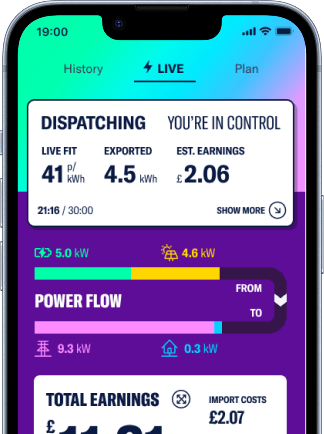
Even with the system doing the heavy lifting, we learnt that people absolutely still want to stay in the loop. Our app gave customers a clear, simple view of what their system was planning to do next, how the prices were shifting, and how much they were spending or saving. That wonderful mix of automation and clear visibility turned out to be really powerful.
Interestingly, even though Next Solar Max automates the complex decisions, many of our customers shared that they actually felt more in control. Because they could see the bigger picture, they understood how their energy use changes throughout the day.
Trying something new with your home energy can feel like a big step. We appreciate that. Customers told us that clear communication, transparency, and trust in us as a team made a real difference. Knowing what was happening, and exactly why it was happening, helped build real confidence in the technology.
Being honest about what we can improve.
We don’t pretend to have all the answers straight away, which is exactly why pilots like this are so valuable. The early rollout highlighted a few areas where we need to roll up our sleeves and improve.
One consistent piece of feedback was about integration. Customers want everything visible in one place. So, we’ve started expanding Next Solar Max to work with more manufacturers and more home technologies, including electric vehicles. We want your entire home energy system to work together as one seamless team.
We’re also working hard to make it easier to understand the benefits right from the start. Technology can occasionally feel a bit confusing, so we’re focusing on keeping our language simple and straightforward. We want people to clearly see how a solar power tariff compares to other options before they decide to join us.
What’s next on our shared journey.
This really is just the beginning of the road. Piloted under the name Next Solar Max, we’re now bringing the dynamic tariff to more homes with our beta release, named Next Optimise. We’re looking forward to wider compatibility across different solar and battery systems, continued tweaks to make the app experience even smoother, and creating more ways to connect different parts of your home energy setup.
Your solar panels already give you a fantastic start by generating your own renewable electricity. But this pilot has shown us what happens when we take that journey one step further. By combining smart automation with dynamic wholesale pricing, your home can make much better energy decisions, without you having to lift a finger.
Less guesswork, more value, and a simpler way to understand your home. We think that sounds like a brighter way forward.
Solar tariff FAQs.
How does a solar tariff work?
A solar tariff is a specialised energy plan designed for homes that generate and store their own electricity. Traditionally, you might have heard of export tariffs, where you’re simply paid for the extra energy you send back to the grid. Today, modern options like a dynamic solar tariff go a step further. They look at both the energy you buy from the grid and the energy you sell back. By tracking wholesale energy prices throughout the day, these tariffs allow smart technology to automatically import energy when it is cheap and export your stored solar energy when it is most valuable.
What are the best solar tariff plans available in the UK?
Finding the best tariff for solar panels really depends on your unique home setup. If you only have solar panels, a standard export tariff might suit you well. However, if you have a battery installed alongside your panels, a dynamic or time-of-use tariff is often the most beneficial. The best plan is the one that aligns with your daily routine and the specific technology you have installed at home. We always recommend looking at your average energy usage before making a decision.
How can I compare solar tariff prices from different providers?
Comparing prices is a smart move. When looking across the market, it’s helpful to look beyond just the standard unit rate. You’ll want to check the export rates (how much they pay you for your energy), the standing charges, and whether the tariff offers off-peak hours for cheaper importing. It is also wise to check if there are any exit fees involved. Using impartial, Ofgem-accredited comparison websites is a great way to view different options side by side.
Which companies offer competitive solar tariffs for home installations?
The UK energy market is evolving quickly, and several providers are introducing innovative plans, and we offer various plans tailored for renewable setups. Here at E.ON Next, we’re incredibly proud of our Next Optimise tariff, which focuses heavily on automating the process to make managing your energy as effortless as possible. We encourage you to explore the market to see which features appeal most to you.
Where can I find solar tariff reviews for UK energy suppliers?
Listening to other customers is often the best way to gauge a service. If you’re looking for honest reviews about a specific solar panel tariff, websites like Trustpilot are very helpful. Additionally, independent consumer champions like Which? regularly review energy suppliers and their specific tariffs. You can also look at the Citizens Advice energy star rating, which scores suppliers on their customer service and complaint handling.
What solar tariff options include battery storage solutions?
If you have a battery, you’ll want to look for a specific solar battery tariff. These are often called "time-of-use" or "dynamic" tariffs. Because batteries allow you to store energy, these tariffs are structured to give you cheaper electricity rates during off-peak times (often overnight). You can use these low battery charging rates to fill up your storage, and then run your home off that cheap energy during the expensive evening peak. Our Next Optimise tariff is built entirely around this storage capability.
How can I identify reputable installers for solar panels that help with tariff applications?
Getting your hardware installed safely and correctly is just as important as choosing the right tariff. We highly recommend always looking for an installer who is MCS (Microgeneration Certification Scheme) certified. This certification ensures they meet strict quality and safety standards. An MCS certificate is also usually required by energy providers before you can sign up for an export tariff. Rest assured, we offer full, certified installation services, and our team is always happy to guide you through the tariff application process once your panels are on the roof.
Learn how Next Optimise can help save you smarter on solar and battery.
- 1. https://news.eonenergy.com/news/e-on-next-rolls-out-next-optimise-its-new-smart-service-for-solar-and-battery-homes-as-pilot-shows-gbp-18-monthly-bill-savings
- 2. Assumptions are based on our quoting tools, using bills based on load profile and 2025 W/H market.
Published: 20/04/2026
Related Blogs

Stack your storage savings: Get up to £1,000 off solar and battery or battery only packages.
Find out how you could get up to £1,000 off our solar and battery or battery only packages. Available for a limited time.

How to reduce gas bills: Moving from savings to independence
Tired of rising gas costs? Learn ways to save on UK energy bills, reducing gas usage to removing gas bill entirely with solar, battery storage & heat pump.

E.ON Next confirms it will pass on savings from VAT cut to customers.
Following the Government’s decision to remove VAT from electricity bills from 1 October, E.ON Next has confirmed it will pass on every penny of savings to its customers.

Energy prices are rising, should I fix my tariff?
Fixed tariffs are back on the menu at E.ON Next so, are you better off fixing your tariff now or staying on the standard variable tariff, as the prices are rising to £1,723 from October 2026?

The home energy stack of 2030: How Next Optimise is building the foundation for your fully automated home energy system.
Discover the future of your home energy stack with E.ON Next Optimise. Learn how to build a fully automated energy system using your battery, solar, and EV.
Related Blogs
Stack your storage savings: Get up to £1,000 off solar and battery or battery only packages.
Find out how you could get up to £1,000 off our solar and battery or battery only packages. Available for a limited time.
How to reduce gas bills: Moving from savings to independence
Tired of rising gas costs? Learn ways to save on UK energy bills, reducing gas usage to removing gas bill entirely with solar, battery storage & heat pump.
E.ON Next confirms it will pass on savings from VAT cut to customers.
Following the Government’s decision to remove VAT from electricity bills from 1 October, E.ON Next has confirmed it will pass on every penny of savings to its customers.
Energy prices are rising, should I fix my tariff?
Fixed tariffs are back on the menu at E.ON Next so, are you better off fixing your tariff now or staying on the standard variable tariff, as the prices are rising to £1,723 from October 2026?
The home energy stack of 2030: How Next Optimise is building the foundation for your fully automated home energy system.
Discover the future of your home energy stack with E.ON Next Optimise. Learn how to build a fully automated energy system using your battery, solar, and EV.
Recent Blogs
Stack your storage savings: Get up to £1,000 off solar and battery or battery only packages.
Find out how you could get up to £1,000 off our solar and battery or battery only packages. Available for a limited time.

Guaranteed warmth: How the E.ON Next 5-Year Performance guarantees your home.
Discover how our 5-Year Performance Guarantee protects your home. Plus, learn how pairing a heat pump with a smart tariff could save you up to £800 a year.
How to reduce gas bills: Moving from savings to independence
Tired of rising gas costs? Learn ways to save on UK energy bills, reducing gas usage to removing gas bill entirely with solar, battery storage & heat pump.