Smarter power, clearer conscience: Why your EV belongs on the charger the moment you arrive.
Author: E.ON Next
Reading Time: 4 mins
For the climate-conscious driver, making the switch to an electric vehicle (EV) is a significant step forward. You've done the research, waved goodbye to the petrol station, and stepped away from fossil-fuel tailpipe emissions. But here's a detail that many EV owners miss: The environmental contribution doesn't actually stop at the tailpipe.
Right now, you might be treating your garage or driveway like a passive parking spot. You pull up, leave the car sitting there, and maybe head out late at night to plug it in right before you go to bed.
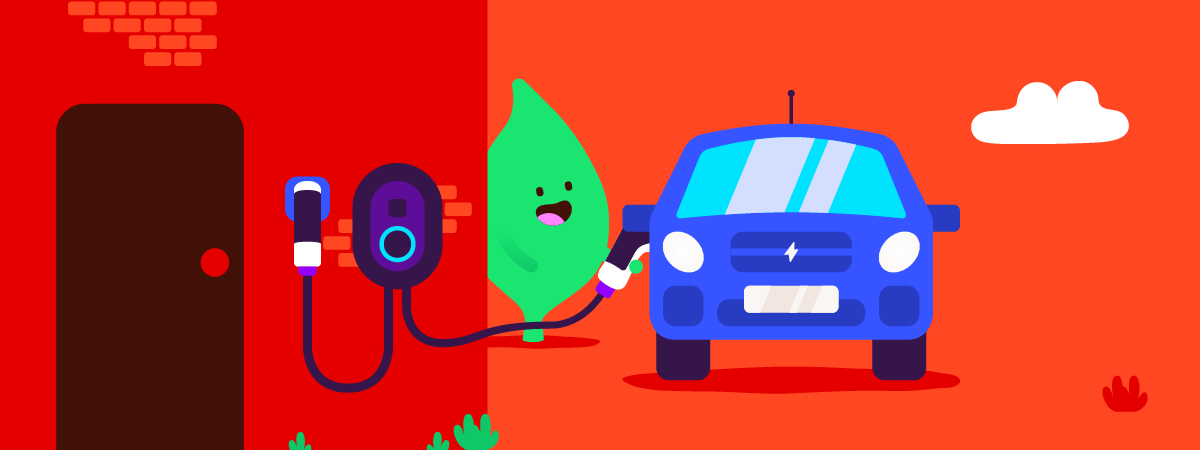
By waiting, you're missing out on a valuable opportunity. Your EV isn't just a tool to get you from point A to point B. It's a large battery on wheels that can actively help support a lower-carbon energy grid. But it can only do that if it's physically connected to your home from the moment you step out of the driver's seat.
Welcome to the household ripple effect, a simple habit that turns your home into an active participant in the UK's transition toward lower-carbon energy.
Becoming an active participant in the energy transition.
To understand why plugging in early matters, we have to look at how the UK electricity grid operates. The electricity powering your home is a constant, shifting mix of different energy sources, changing based on weather patterns and collective consumer behavior. On a windy or sunny afternoon, the grid is often supplied with an abundance of cheaper, renewable-backed generation. During the evening peak, fossil fuels are more frequently required to meet nationwide demand.
This shifting balance is known as grid carbon intensity. If you want to build a more sustainable home charging routine, your vehicle needs to adapt to these real-time shifts in the energy mix. By keeping your car plugged in, you allow smart technology to optimise for the exact moments when the grid relies less on fossil fuels. It shifts your home from a passive consumer of energy to an active contributor to grid flexibility.
How plugging in early creates a smarter charging ripple effect.
So, what actually happens when you plug your car in the moment you get home? It sets off a process that optimises your use of lower-carbon electricity and helps reduce your overall charging carbon footprint.
1. Maximising the grid flexibility window.
The primary mechanism of smart EV charging is time. Specifically, it's about the utility of a prolonged physical connection.
Imagine you get home at 5:30pm and plug your car in immediately. You don't need to drive again until 7:30am the next morning. That gives your vehicle a 14-hour operational runway. If you wait until 10:30pm to plug it in, you've shrunk that window down to just nine hours.
By plugging in on arrival at 5:30pm, you add five hours of flexibility. This does not mean your car automatically begins drawing power during the more expensive evening peak. Instead, it gives the E.ON Next Home app a much larger timeframe to pause charging during high-demand, higher-carbon evening periods. The app can simply hold off, scheduling the bulk of your charge for when lower-carbon energy is more abundant on the grid later at night.
With Next Drive Smart, you just select your ready-by time in the app. If the system selects optimisation windows outside the standard fixed off-peak times to ensure your car is ready, those specific automated charging sessions are still credited at off-peak rates. It's a solution designed for both energy management and cost efficiency.
2. Utilising automated lower-carbon windows.
Smarter home charging relies heavily on the variable nature of renewable generation. Energy from UK wind farms often surges unexpectedly in the middle of the night when nationwide demand is at its lowest. When wind generation increases at 3:00am, the grid experiences a localised drop in carbon intensity.
However, you cannot capture these lower-carbon surges if your charging cable remains disconnected.
If your vehicle is plugged in and on standby, intelligent software can automatically capitalise on these sudden shifts in grid intensity. The moment a higher proportion of renewable power becomes available, your charger can respond. Leaving your car unplugged means you miss these real-time grid optimisations entirely, as automated scheduling requires an active physical connection.
3. Data-driven optimisation for the home.
Modern households can utilise smart energy management applications to better understand their overall energy footprint. Because an EV is typically one of the largest energy consumers in a household, its scheduling data is an essential component.
When your EV connects early in the evening, it securely shares its current charging requirements with your app. It provides the system with the parameters needed to calculate how much power is required and the total time available to deliver it.
This allows compatible smart home software to better forecast energy allocations for the rest of the night. By knowing the EV is connected and scheduled, you can more effectively manage your total household energy usage alongside other low-carbon technologies you may own, such as solar arrays or home battery storage.
A simple daily habit for collective environmental change.
Driving an electric vehicle is an important milestone in reducing personal emissions. Charging it intentionally is the next step.
While individual actions can feel small, the simple habit of connecting your charging cable the moment you park is a micro-habit that helps reduce your household’s collective carbon footprint. It provides the grid with the demand flexibility required to help reduce overall reliance on fossil fuels over time.
Ready to make your home charging smarter and more cost-effective? Explore the Next Drive Smart tariff today (compatible smart meter required) and see how our smart charging features can help optimise your daily drive.
Published: 01/10/2026
Related Blogs
Compare electric vehicle tariffs: Next Drive Fixed vs Next Drive Smart.
Compare E.ON Next EV tariffs. Discover whether Next Drive Fixed (set timer) or Next Drive Smart (lowest off-peak rate + app automation) fits your home.
Tethered vs untethered EV home chargers.
Choose the right EV charger for your home. We're here to help with a quick guide to tethered vs untethered home chargers.

Charge smarter: why every EV driver needs an electric car charging app.
Discover how an electric car charging app makes managing your EV effortless. Learn about smart charging, saving money, and simplifying your home energy management today.
What is EV smart charging and how does it work?
Discover how smart EV charging works, bust common tech myths, and see how Next Drive Smart saves you money on your whole home's energy bills.
The real barriers and benefits of going electric. Insights from 5,000 UK electric vehicle drivers.
What's really stopping people from switching to electric vehicles? To find out, E.ON Next surveyed nearly 5,000 UK drivers. Read on to get the full lowdown.
Related Blogs
Compare electric vehicle tariffs: Next Drive Fixed vs Next Drive Smart.
Compare E.ON Next EV tariffs. Discover whether Next Drive Fixed (set timer) or Next Drive Smart (lowest off-peak rate + app automation) fits your home.
Tethered vs untethered EV home chargers.
Choose the right EV charger for your home. We're here to help with a quick guide to tethered vs untethered home chargers.
Charge smarter: why every EV driver needs an electric car charging app.
Discover how an electric car charging app makes managing your EV effortless. Learn about smart charging, saving money, and simplifying your home energy management today.
What is EV smart charging and how does it work?
Discover how smart EV charging works, bust common tech myths, and see how Next Drive Smart saves you money on your whole home's energy bills.
The real barriers and benefits of going electric. Insights from 5,000 UK electric vehicle drivers.
What's really stopping people from switching to electric vehicles? To find out, E.ON Next surveyed nearly 5,000 UK drivers. Read on to get the full lowdown.
Recent Blogs
Compare electric vehicle tariffs: Next Drive Fixed vs Next Drive Smart.
Compare E.ON Next EV tariffs. Discover whether Next Drive Fixed (set timer) or Next Drive Smart (lowest off-peak rate + app automation) fits your home.
How to transform your property into a modern eco home?
Learn how you can turn your home into a sustainable eco house. Our blog offers insights for families seeking eco-friendly and energy efficient home tech.

E.ON completes acquisition of OVO.
No immediate change for customers of either business, with all tariffs and customer service channels unchanged.