The grid needs your battery more than you think.
Author: E.ON Next
Reading Time: 10 mins
Summary:
Britain's electricity grid is undergoing a massive transformation to reach clean power by 2030, requiring significantly more flexibility to balance supply and demand.
Home batteries are a critical, underutilized tool for this flexibility, helping stabilize the grid by responding to real-time energy needs.
Manual energy management is inefficient; automated services like Next Optimise can optimize your battery's charge and discharge cycles, saving you money while supporting the grid.
With the number of home battery installations rapidly increasing, household batteries are becoming a vital component of the UK's energy infrastructure.
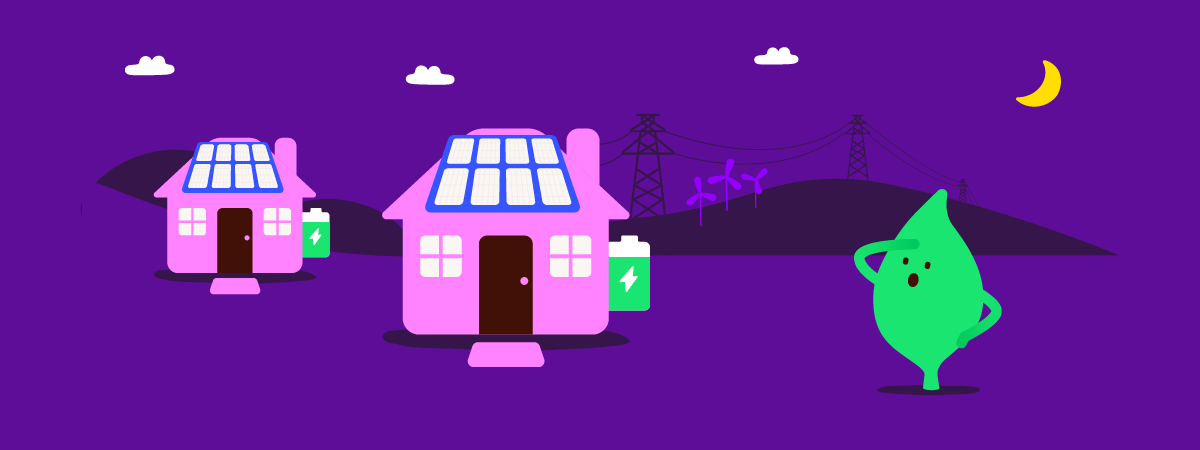
When most people install a home battery, they're thinking about themselves. Lower bills. More of their solar staying in the house. A bit of peace of mind during a power cut.
All fair reasons. All true. But there's a bigger story playing out in the background, and your battery has a starring role in it.
Britain's electricity grid is in the middle of the biggest transformation since it was first built. The country is racing to hit clean power by 2030, fossil fuel plants are being switched off faster than they're being replaced, and the old way of balancing supply and demand is starting to creak. The system needs flexibility, and it needs a lot of it. Home batteries, sitting quietly at homes across the country, are turning out to be one of the most useful tools available.
You probably didn't sign up for that when you got your battery installed. But it matters, because it changes how much value you can actually get out of your kit.
The grid was built for a world that's changing fast.
For most of the last century, the British electricity system worked in a fairly simple way. A handful of big power stations would crank up to match whatever demand the country threw at them. If demand spiked at 6pm when everyone got home and put the kettle on, you fired up another generator. Predictable. Controllable.
That setup is being reshaped. Wind and solar are now central to the generation mix, and the country is building a lot more of both. The Clean Power 2030 Action Plan, published by DESNZ in December 2024, sets out targets of 43 to 50 GW of offshore wind, 27 to 29 GW of onshore wind, and 45 to 47 GW of solar by 2030. That's a step change in clean generation capacity, and most of it has to come online in the next few years.
The catch is that wind and solar don't generate on demand. The wind blows when it blows. The sun shines when it shines. Sometimes the country has more renewable energy than it knows what to do with. Sometimes it has barely any at all. The traditional approach of "fire up another power station" doesn't fit a system where supply is set by the weather.
To keep the system stable, the grid needs ways to shift energy use and storage around to match what's available. That's where flexibility comes in. It's being built into every layer of the system. Big batteries connected directly to the transmission network. Long-duration storage like pumped hydro. Smart EV chargers. Heat pumps that pre-heat homes when energy is cheap. And, increasingly, home batteries.
The flexibility gap is huge.
The government's Clean Flexibility Roadmap, published in July 2025 by DESNZ, NESO and Ofgem, put hard numbers on what the country needs. Britain had 24 GW of flexibility capacity in 2023. By 2030, it needs between 51 and 66 GW, a two to three-fold increase. NESO's central estimate is 55.2 GW by 2030, rising to around 204 GW by 2050.
This isn't a target someone hopes to hit. It's a requirement for managing a system with more variable renewables. The roadmap is explicit that consumer-led flexibility, including home batteries, smart EV chargers, and heat pumps, is one of the main pillars holding the whole thing up. It's not a side-show. The system is being designed around the assumption that millions of homes will be active participants, not passive customers.
If you've already got solar and a battery, you're sitting on the most valuable piece of that puzzle.
Get a quote for Next Optimise today and put your battery to work.
What "flexibility" actually means.
Strip the jargon away and flexibility is a simple idea. It's the ability to shift when you use or send energy, in response to what the grid needs at that moment.
If the grid is short on power, you reduce demand or export some of your stored energy. If the grid has too much (yes, that happens, especially on sunny, windy days), you soak some up. Done across millions of homes at the same time, it adds up to a meaningful balancing tool.
The most visible version of this for households is the Demand Flexibility Service, run by the National Energy System Operator. It launched as an emergency winter measure in 2022 when the country was nervous about supply during the energy crisis. It worked. In November 2024 it became year-round. By the end of winter 2024-25, around 2 million households and businesses were registered with providers to take part. In April 2026, the service expanded again to add bi-directional flexibility, meaning households can now earn money for using more electricity when the grid has surplus renewables, not just for using less when it's stressed.
Until recently, flexibility schemes were all about using less. Now they're about timing. The grid sometimes has more renewable energy than it can use at certain points in the day. If your battery can charge up during those windows, you're not just earning money. You're helping make sure that clean generation gets used.
This is exactly what Next Optimise is built for. It watches the wholesale market for you and charges your battery when energy is cheap and plentiful, then discharges it when prices climb at peak demand. You don't have to track price signals or remember to do anything. Your battery just works the market on your behalf.
Get a quote for Next Optimise today and start earning from the timing.
Ready to unlock your battery's potential? Get your Next Optimise quote today.
- Dynamic import and export tariff.
- 12 months, no exit fees.
- AI-powered app that does the heavy lifting.
Why your battery is so much more useful than a person.
Lots of people already take part in flexibility schemes manually. They shift the dishwasher, hold off on the kettle, and run the washing machine later in the evening. It's a genuinely useful way to take part, and millions of households do it.
A battery just takes things further. An early trial run by SolarEdge and Smart Metering Systems during the winter of 2022-23 looked at this directly. Across six DFS events that February and March, they compared homes with batteries automated to respond to grid signals against the average manual participant.
The battery-equipped homes reduced grid demand up to six times more. The average battery participant exported 2.7 kWh per event. The average manual participant managed less than 0.5 kWh. The highest single-event reward earned by a battery participant was £25.60, with an average of £6.52.
The reason isn't that manual households were lazy. It's that a battery can do something a person can't. It can respond instantly, precisely, and without anyone having to remember it's happening. You're asleep, at work, on holiday. The battery is still on duty.
This is also why the grid is so interested in batteries specifically. A battery can deliver more reliable, faster, and more consistent flexibility than a manual response.
Home batteries are showing up faster than anyone expected.
The home battery boom is real and it's accelerating. According to the Microgeneration Certification Scheme, which tracks small-scale renewable installations, the UK had almost 20,000 certified battery installations in the first six months of 2025 alone. That was a 130% increase on the same period the year before.
The same report shows the wider picture. Solar installations were up 36%, with 120,000 systems going in. Heat pumps were up 12%, with 30,000 installations. The British home is electrifying, and electrifying fast.
Every one of those installations is, in flexibility terms, a tiny piece of grid infrastructure. They don't look like infrastructure. They look like a panel on the roof, a box in the garage, an EV charger on the driveway. But added together, they represent millions of points where energy can be generated, stored, used, or sent back, in response to whatever the grid needs at that moment.
If your home is one of those millions, you've got the hardware. The question is whether it's actually being used to its full potential.
Get a quote for Next Optimise today and find out what your battery could be earning.
The bit that's easy to miss.
Here's where it gets interesting. The grid doesn't just need lots of batteries. It needs lots of batteries that are doing the right thing at the right time.
A battery sitting in a home, charging from the grid at 6pm during peak demand and discharging at 2am when nobody needs it, isn't helping anyone. The value comes from the timing.
That's the gap automation fills. Without it, your battery is just a box on the wall that stores energy whenever it's set to. Most batteries running on simple charge schedules end up doing a fraction of what they're capable of, capturing the easy gains from cheap overnight charging and missing everything else.
With proper automation, your battery becomes part of a coordinated system that responds to wholesale prices, grid signals, and renewable generation in real time. Every half hour, the system asks: what's the most valuable thing this battery could be doing right now? Charging? Discharging? Sitting idle? Then it acts.
That's exactly what Next Optimise does. It plugs your battery into the live wholesale market and runs the timing for you. When wholesale prices fall to very low or negative levels because there's lots of renewable generation, your battery charges up and you get paid for it. When prices climb at peak demand, your battery discharges and helps take pressure off the grid.
You're already an energy market participant.
This is the shift that hasn't quite landed in the public conversation yet. If you have solar and a battery, you're not really an energy consumer in the traditional sense anymore. You're a small power station with storage. You generate, you store, you export, you import. The grid sees you as an active participant, not a passive customer.
What's missing for most households is the technology to make that participation actually pay. Manually deciding when to charge and discharge based on next-day price forecasts isn't realistic for anyone with a job and a life. So the battery sits there, doing a fraction of what it's capable of, and the grid loses out on flexibility it could have used.
Automation closes that gap. As more homes get batteries, and more of those batteries get automated, the cumulative effect on the grid becomes hard to ignore. The Clean Flexibility Roadmap models a future where consumer-led flexibility from homes is one of the largest sources of grid balancing in the country. Not big industrial sites. Not power stations. Houses.
What this means for everyone's bills.
There's a simple version of this story. The cheapest way to balance a renewables-heavy grid is with assets that are already being built for other reasons. The country is putting batteries in homes anyway, because households want lower bills and a bit of energy independence. If those batteries are smart, the grid gets a flexibility resource that would otherwise cost billions to build separately.
The maths matters. When the grid runs out of capacity to move power from where it's generated to where it's needed, the balancing costs are significant, running into hundreds of millions of pounds a year and ultimately feeding back into bills. Every home battery that absorbs surplus energy, or releases it at the right moment, is a small piece of that balancing problem solved closer to home. Multiplied across hundreds of thousands of homes, the savings start to matter for everyone.
There's a version of the energy transition where the grid spends huge amounts of money building dedicated flexibility, and pays for it through everyone's bills. There's another version where homes do a meaningful share of the work, get paid for it, and the system as a whole is cheaper. We're somewhere between the two right now, and the more home batteries that come online and run intelligently, the closer we get to the cheaper version.
Your battery, doing its actual job.
Your battery is doing more than lowering your bill. It's a small piece of the infrastructure the country needs as the energy system evolves. The more batteries that are smart, automated, and responsive to grid conditions, the less the country needs to spend on additional infrastructure to keep the system balanced.
You don't have to think of yourself as part of a movement, or even particularly care about the grid. You just have to let the technology do its job. That's what Next Optimise is for. It plugs your battery into the live wholesale market, charges it when prices are low, and discharges it when prices are high, so your battery earns more for you and the grid also benefits.
Get a quote for Next Optimise today and join the smart energy revolution.
Published: 17/06/2026
Updated: 17/06/2026
Related Blogs

The home energy stack of 2030: How Next Optimise is building the foundation for your fully automated home energy system.
Discover the future of your home energy stack with E.ON Next Optimise. Learn how to build a fully automated energy system using your battery, solar, and EV.

How half hourly settlement changed the energy market (and why it matters for your home).
Discover how mandatory half-hourly settlement is revolutionising the UK energy market. Learn how this change enables Next Optimise to automatically trade your solar battery for maximum savings.

Is my home ready for Next Optimise?
This guide walks through what you need, what to check, and what to do before you get started with Next Optimise.

Boiler Upgrade Scheme update: Get a £9,000 heat pump grant for oil and Liquefied Petroleum Gas homes.
The Boiler Upgrade Scheme funding has risen to £9,000 for properties replacing oil or Liquefied Petroleum Gas heating systems in England and Wales. Find out more.
Relinquishing control: Why letting an algorithm run your battery is a smart move.
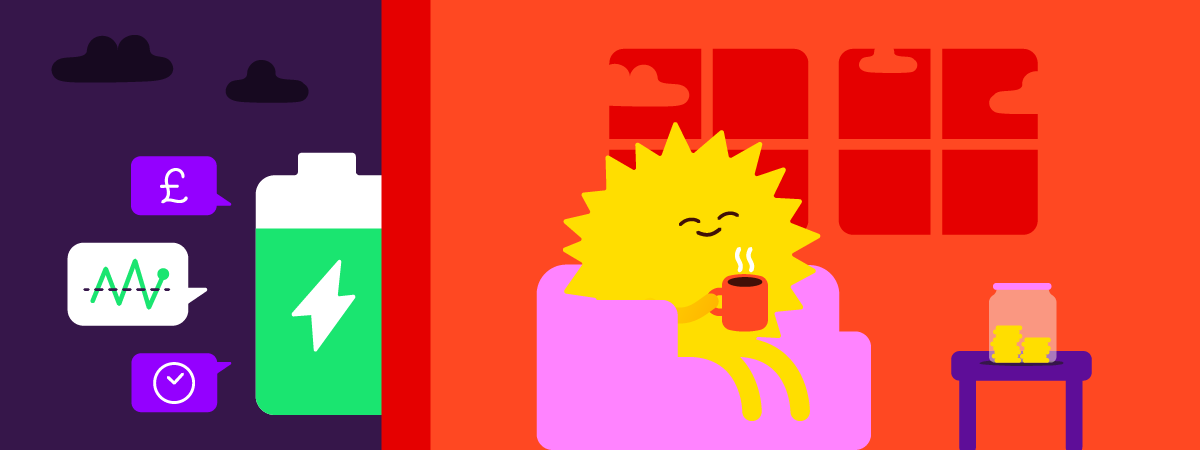
Manual home battery management misses opportunities. Next Optimise uses real-time prices & forecasts to charge, discharge, and export, saving households an average of £300/year.
Related Blogs
The home energy stack of 2030: How Next Optimise is building the foundation for your fully automated home energy system.
Discover the future of your home energy stack with E.ON Next Optimise. Learn how to build a fully automated energy system using your battery, solar, and EV.
How half hourly settlement changed the energy market (and why it matters for your home).
Discover how mandatory half-hourly settlement is revolutionising the UK energy market. Learn how this change enables Next Optimise to automatically trade your solar battery for maximum savings.
Is my home ready for Next Optimise?
This guide walks through what you need, what to check, and what to do before you get started with Next Optimise.
Boiler Upgrade Scheme update: Get a £9,000 heat pump grant for oil and Liquefied Petroleum Gas homes.
The Boiler Upgrade Scheme funding has risen to £9,000 for properties replacing oil or Liquefied Petroleum Gas heating systems in England and Wales. Find out more.
Relinquishing control: Why letting an algorithm run your battery is a smart move.
Manual home battery management misses opportunities. Next Optimise uses real-time prices & forecasts to charge, discharge, and export, saving households an average of £300/year.
Recent Blogs

Guaranteed warmth: How the E.ON Next 5-Year Performance guarantees your home.
Discover how our 5-Year Performance Guarantee protects your home. Plus, learn how pairing a heat pump with a smart tariff could save you up to £800 a year.
How to reduce gas bills: Moving from savings to independence
Tired of rising gas costs? Learn ways to save on UK energy bills, reducing gas usage to removing gas bill entirely with solar, battery storage & heat pump.

E.ON Next confirms it will pass on savings from VAT cut to customers.
Following the Government’s decision to remove VAT from electricity bills from 1 October, E.ON Next has confirmed it will pass on every penny of savings to its customers.