See how you can use the sun to power your home.
What is a solar panel?
A solar panel is a device that converts sunlight into electricity. You'll find them installed on more and more homes and businesses as we all try and do our bit towards using more renewable energy sources.
Solar panels in a nutshell.

Learn the ins and outs of how solar panels work and how they could save you money in the long run.
How solar panels work.
The principle behind solar technology and solar panels is simpler than you think. At the heart of every solar panel lies an array of photovoltaic (PV) cells, made of a semi conductor like silicon. These PV cells possess the remarkable ability to convert sunlight into usable electricity. The process, known as the photovoltaic effect, is the cornerstone of solar energy production.
When sunlight strikes a PV cell, it interacts with the semiconductor material. The energy from the sunlight (photons) knocks electrons loose from their atoms, creating free electrons. These free electrons are then able to flow through the PV cell, and generate an electric current. This current is direct current (DC) since it flows in one direction only.
However, the electrical grid and most household appliances operate on alternating current (AC), which changes direction 50 times a second. To make the DC electricity from the PV cells compatible with the grid and appliances, it must be converted using an inverter.
The inverter transforms the DC power into AC power, and allows the electricity generated by the solar panels to be seamlessly integrated into the property's existing electrical system.
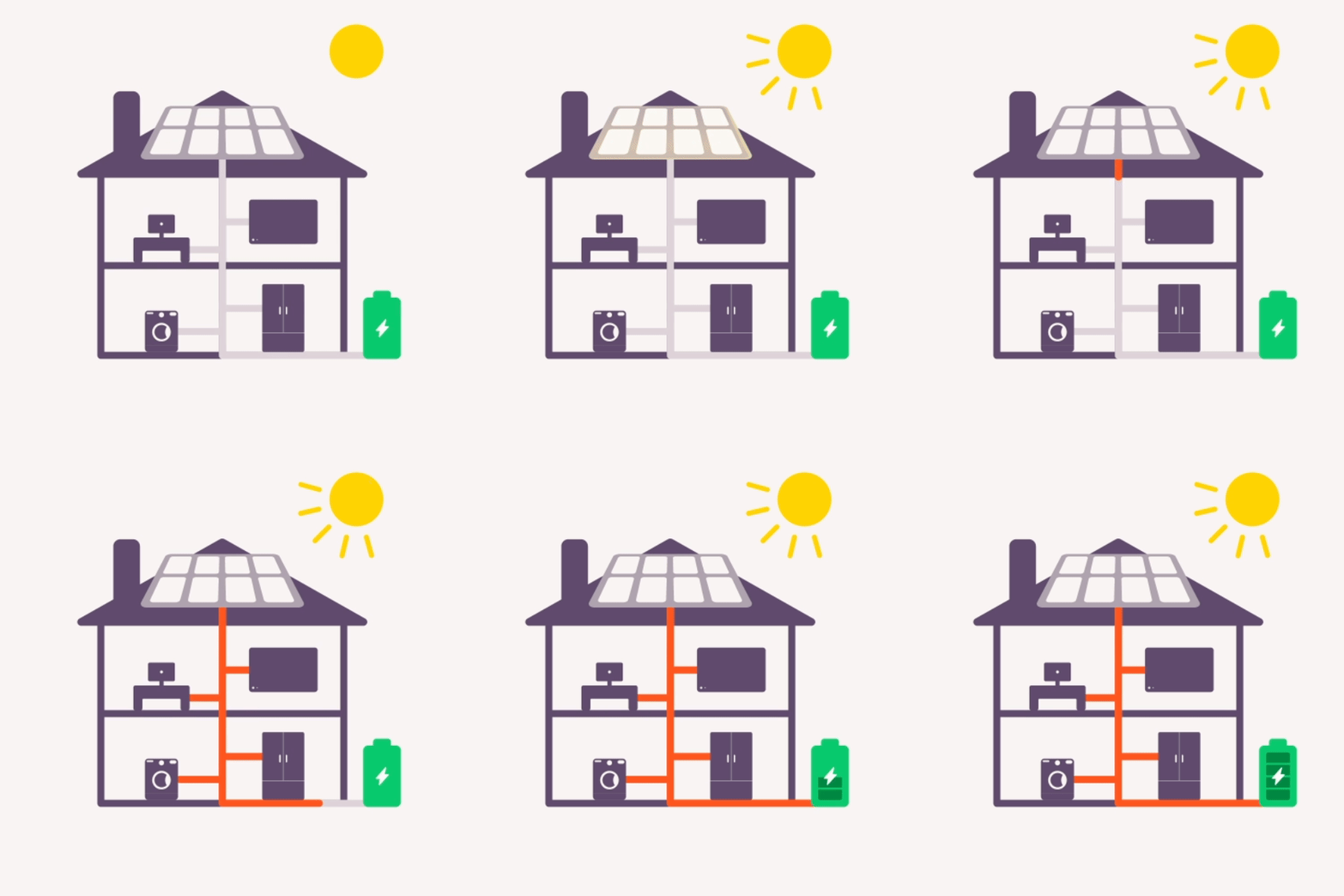
The beauty of solar energy lies in this simple and sustainable power generation. Sunlight, an abundant and renewable resource, is harnessed by solar panels and converted into electricity without producing greenhouse gases in the process. This reduces our reliance on fossil fuels and contributes to a cleaner future.
Do solar panels work at night?
Unsurprisingly, without the sun around, solar panels on your rooftop do not generate electricity at night.
However if you have a battery storage system, the surplus energy that you generate throughout the day can be stored and used to power your home at night.
Solar batteries and savings.
When the sun decides to take a break, there's no need to worry. With solar batteries you can store the solar power you generate and use it to power your home, even at night, giving you even more energy independence. Plus, a solar battery means your setup is working overtime to cut down on carbon emissions. And that's a solid step towards cleaning up our planet and hitting those environmental goals the UK's aiming for.
So, if you'd like more details about the benefits, why not take a look at our useful guide to solar battery storage?
How do solar panels help with electricity bills?
If you have solar panels installed, you'll still get an electricity bill with any charges for electricity you used that wasn't generated by your solar panels as well as the standing charge for your meter. As you'll be generating and using solar energy, you should see a reduction in your electricity usage.
Your gas bill won't be affected by your solar technology.
Do I need to let my electricity supplier know I have solar panels?
If you want to get paid for exported electricity under the Smart Export Guarantee (SEG) scheme, then you will need a smart meter, so you'll need to tell your supplier as they'll want to make sure that your meter is set up to correctly record how much electricity you're using from the grid and how much you're exporting back to it.
You can get a SEG tariff from anyone, not just your electricity supplier, however we have some exclusive SEG rates for our solar and battery customers.
How do I know if the grid has taken the excess electricity I've generated?
Your smart meter will automatically track the flow of electricity from your home to the grid and we'll credit your account accordingly if you're on a Smart Export Guarantee tariff with us.
Get up to £200 off new solar panels and batteries.
E.ON are currently offering £200 off solar panels and battery storage and £150 off solar panels, so don't miss out. T&Cs apply.

Frequently asked questions
Do I need a south-facing roof for solar panels?
While a south-facing roof is considered optimal for maximising electricity generation, it is not strictly necessary. East-West facing roofs may actually generate power which better meets your lifestyle, peaking in the morning (East) and afternoon (West), so this may have a bigger effect on your bill savings.
Do I need constant sunshine for my solar panels to work?
No, solar panels work in all daylight conditions, including when it's cloudy. The panels actually get less efficient as they get hotter, so peak output is often observed on cold sunny days, not in the middle of summer, when output may be a few percent less.
How do solar panels connect to the electrical supply in my home?
The electricity produced by solar panels is converted from DC to AC by the inverter. It is then taken from the inverter via an AC cable to a distribution board, powering the circuits in your home.
Will my solar panels work during a power cut?
In a power cut, the inverter switches off, preventing generation from the solar panels – this is to protect people who may be working on the electrical supply somewhere, trying to fix the fault.
Do solar panels work in winter?
Yes solar panels still work in winter if there is sunlight. However, like on cloudy days in the summer, the less sunlight there is the less electricity that is generated.
With winter having fewer hours of sunlight and the sun being lower in the sky, you will end up using more electricity from the grid.
Do solar panels need direct sunlight or just light?
Solar technology performs better in direct sunlight, however they can function without it. For example your solar panels will still generate electricity if it's a cloudy day or your rooftop is in the shade.