Your guide to electric vehicle home charger installations.

Can I get an EV charger installed at home?
Yes, you can get a home EV charger installation by booking it online with us. A home EV charger makes it easy to charge your electric car overnight, so you don’t need to find a public charging point in the morning.
It's also a faster option than trying to charge your car off the mains supply using a three-pin plug.
Our current range of home EV chargers offer 7-7.4kW of power, making them much faster; though they won't charge as quickly as the public EV rapid chargers, which are around 50kW, or ultra-fast chargers that offer around 100kW.
Please be aware that we are not currently installing EV chargers in these areas:
Scottish Islands, Isle of Wight, Northern Ireland, Guernsey and Jersey.
Any of the following UK postcodes: HS1–HS9, KW15–KW17, ZE1–ZE3, PO30–PO41, BT, JE, GY.
Eligibility criteria also apply.
How long does it take to install an EV charger at home?
A standard home EV charger installation usually takes around two to four hours, depending on how straightforward the setup is. Installers first complete safety checks, confirm the charger location, and run cabling from your consumer unit to the charger. If your property needs extra work (such as longer cable runs), drilling through thick walls, or minor electrical adjustments, then the job can take a bit longer.
More complex installations, especially those involving external groundwork or supply upgrades, may extend the visit or require a follow-up appointment.
Selecting an EV charger for your home.
Getting the right charger to match your needs will make your transition to EV life easier, so it’s worth spending some time thinking about your needs before you take the plunge. Here’s our handy guide to what to consider when choosing a charger.
Budget: Set a budget before you start your research. EV chargers come in a wide price range, so knowing your budget will help narrow down your options.
Charging speed: Chargers come with a range of power outputs, measured in kilowatts (kW). Higher kW chargers offer faster charging times.
Features: Higher-end chargers can offer advanced features like smart charging, Wi-Fi connectivity, load balancing, and integration with solar panels. Think about whether you can or want to pay for these extra features in your charger. We dive into what smart features are available below.
Compatibility and safety: Make sure that the charger you choose is compatible with your EV and is professionally installed. You can do this by checking the charger and your EV’s connector types and confirming charging capacity. Also make sure your EV charger has safety certificates like CE.
Cable length: Measure how long you need your EV charger cable to be and make sure that the charger you choose has a cable that’s long enough to reach your car.
Tethered or untethered: Tethered chargers have a fixed cable attached, whereas with untethered chargers you need to use your own separate cable.
Future-proofing: As with lots of technology, EV charger technology is advancing quickly, so it’s worth looking for an EV charger that is easy to upgrade or already offers advanced features.
What kind of smart features can home EV chargers offer?
EV chargers with smart features can make charging more convenient, help you manage your energy use and help you save money too, so if you can afford a smart home EV charger it’s worth considering. Some key smart features to look out for for you EV charger installation include:
Remote monitoring and control
For chargers with smartphone apps, like our range of home EV chargers, you can monitor charging status, start or stop charging, and adjust settings remotely.
Scheduled charging.
You can also set charging schedules to take advantage of off-peak electricity rates that some tariffs, like our Next Drive tariff include. This can reduce your charging costs.
How to book an EV charger installation appointment.
You can book an EV charger installation with us. Your quote will include both the EV charger and professional installation. Before purchasing your charger, we’ll ask you a few simple questions to make sure your home is suitable. We'll also ask for photos of where you'd like the charging point to be, as well as where your EV will be parked while charging. We can then book your EV charger installation on a date to suit you.
What’s included in my EV home charger installation?
Your home EV charger installation includes:
Tethered or untethered charger options.
3-year product and 1-year workmanship warranty.
Wi-Fi or 3G/4G compatibility.
Up to 7.4KW output, depending on your electric vehicle.
Type 2 socket on tethered chargers.
Solar charging compatibility.
Dedicated support team and online guides.
What happens during the EV charger installation process?
Installation of your chosen EV charger to a brick or plaster wall on your property.
A maximum run of 5m cable from the wall-mounted position to your fuse box (also known as your consumer unit), with no civil or remedial electrical work needed. Cables longer than 5m can be installed at an additional cost if required.
The cable to the EV charge point being neatly clipped flush to the wall or inside a conduit. A dedicated earthing spike will also be installed.
Checks to ensure your charging point is working correctly with your EV.
Registering your home EV charger’s Guarantee with the manufacturer.
To have an EV charger installed you’ll need:
Dedicated off-street parking, like a drive or garage. We can’t install your charger away from your property, for example a dedicated off-road parking space away from your home.
To check with your landlord if you live in a rented property. We’ll need proof they’ve agreed before we can install the charging point.
A good Wi-Fi connection. Many smart chargers come with features and functions that mean they need to access the internet, so make sure the location you pick for your EV charger is within the range of the router.
Enough electrical capacity to charge your EV. Check your home’s capacity before buying an EV charger to ensure it can support charger installation.
Space to plug in your electric car, and an easily accessible location for the charger to be installed.
Can I install an EV charger myself at home?
No, it's not advisable to install an EV charger yourself at home. A professional EV charger installation at home by us ensures that everything's done safely. You’ll also get a 3 year product and 1 year workmanship warranty.
What to expect on the day of your electric vehicle charger installation?
Firstly, there are a few bits you can do before the installer gets there:
1Make sure the space around your electricity meter and the charger fitting point is clear.
2Get your WiFi password ready to help us connect your charger.
3Your EV charger will arrive on the day of the installation between 7.30am and 9am.
4Confirm where you want the EV charger to be fitted, based on proximity to parking and the type of charger.
5Mount the EV charger and install cabling to connect it to your electricity supply.
6Demonstrate how everything works.
Does my EV charger installation include surge protection?
We include surge protection with EV charger installations for no extra charge if your home is powered by underground electricity cables. Around 85% of homes in the UK are powered this way, so there’s a good chance your home falls into this category. In these cases, we install a standard Type 2 surge protection device (SPD). The remaining 15% of UK homes are supplied with electricity via overhead cables and external telegraph pole mounted chargers. If your home falls under this category, then you’ll need both Type 1 and Type 2 surge protection devices. These devices protect you and your property from harm in the event of a direct or nearby lightning strike. To comply with health and safety regulations, we’re obliged to include these when installing an EV charger on a property of this type. If the above applies to you, then we’ll charge you an additional £50 to fit these devices.
What is the breakdown of EV charger installation costs?
The total cost of installing a home EV charger is made up of several elements, and the exact amount varies based on your property, the charger you choose, and the work required. In general, you can expect costs to fall into the following categories.
Charger hardware.
Different models (for example, socketed vs tethered units or 5m vs 8m cables) have different base prices. More advanced chargers, longer tether lengths, or smart features typically cost more.
Installation labour.
This depends largely on how far the charger is from your consumer unit. Installers usually work in bands (e.g., shorter cable runs vs medium or longer runs). More complex routing, drilling, or additional cable beyond a standard length can increase the cost.
Electrical upgrades.
Some homes require updates such as consumer-unit adjustments or other safety-related electrical work. These are assessed on a case-by-case basis.
Third-party or managed-service fees.
Some installations include external service or fulfilment fees that support coordination, logistics, or compliance checks.
What's included in your price.
Here's what you'll get as part of your package, at no extra cost.
0-5 metre cable installation pack.
Consumer unit including surge protection.
Ohme CT clamp - single phase (100A).
Registration of warranty and Building Control Certificate.
Cabling and consumables.
Delivery to you.
What are the additional factors affecting an EV home charger installation cost?
Your quote usually covers the charger unit and standard installation, but several factors can increase the total cost. These include:
Charger type. Higher-powered units (7.4 kW, 11 kW, 22 kW) and smart chargers typically cost more than basic 3.6 kW models.
Cable distance. If you need more than 5 metres of cabling from your consumer unit, additional charges apply.
Property layout. Terraced homes, awkward access, or routing through multiple floors often require more labour.
Electrical capacity. You may need upgrades to your consumer unit, main fuse, or supply. Work required by your energy supplier or Distribution Network Operator (DNO) isn’t included in the standard price.
Installation complexity. Drilling through thick walls, running cables under floorboards or loft spaces, or using trenching/ducting for underground cables adds cost.*
Mounting location. Wall-mounted chargers are usually cheaper to install than free-standing posts or chargers placed in detached garages or outbuildings.
Parking setup. Driveway installations tend to be the simplest. Gardens, rear parking, or properties with on-street parking may need additional hardware or permissions.
Permissions. Some locations may require council approval.
Connectivity needs. Hardwiring an internet connection via ethernet or extending WiFi coverage is not included and may need a separate provider.*
Extras. Items like surge protection devices, solar-integration kits, cable tidies, or upgraded charging cables add to the overall cost.
Installer choice. Prices vary between installers; local electricians may quote differently to national installation companies.
Do I need an EV tariff?
With our Next Drive EV tariff you get a dedicated EV tariff.Included with this tariff is a free 1 year subscription to Zoom EV benefits and discounts.1
Get the lowdown on finding the best EV charging prices.

If you’re thinking of buying an electric vehicle (EV), or you’ve already made the switch, you’ll want to know the cost of charging it. Check out this explainer video.
Choose an EV charger to suit your needs.
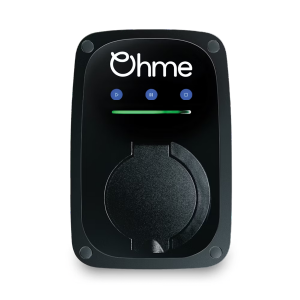
Which is best for your needs? You can choose between the compact dimensions of the Ohme ePod, the tethered convenience of the Ohme Home Pro or the easy RFID sharing of the zappi GLO. Explore all three of these advanced chargers to discover which one suits your life and EV best. Whichever one you go for, you'll benefit from:
Tethered or untethered charger options.
3-year product and 1-year workmanship warranty.
Standard installation.
Wi-Fi or 3G/4G compatibility.
Up to 7.4KW output, depending on your electric vehicle.
Type 2 socket.
Solar charging compatibility.
Dedicated help and support team and online guides.
Frequently asked questions
Do I need an isolator switch installed?
An isolator switch enables the electrician to isolate the flow of electricity to the mains when they’re working on your property. You will need to have an isolator switch installed to ensure your EV charger installation goes safely and smoothly. If you’re an E.ON Next customer, this is included in the cost of your EV charger installation.
What if I need to increase the supply of electricity my home can handle?
As part of your EV charger survey we’ll let you know if you need to increase the Amps into your home to charge your electric car. To do this we’ll contact your District Network Operator (DNO) on your behalf. If a supply increase is needed, your DNO will contact you directly to arrange the fuse upgrade.
What is the cost of an EV charger installation?
The EV charger installation cost is included in the price that you pay for the home charger from us.
What additional costs for installing an EV charger could there be?
The price you're quoted covers the home charger and the electric car charger installation costs, but not:
- Laying of cables under floorboards or loft spaces.
- Hardwiring an internet connection from your charger to your router via ethernet.*
- Extending your WiFi signal.*
- A charging cable.
- Additional work required by your energy supplier or electricity distribution provider such as changes to your consumer unit.
- Trenching or ducting of cables underground.*
- If you require further than 5m installation cable additional charges will apply.
Your installer will be able to discuss these with you, but please be aware that we cannot provide all of these services and so additional arrangements may need to be made with other service providers.
*These services are not available through your E.ON Next installation.
Can you install an EV charger if I have on-street parking?
Unfortunately, no. Your EV charger must be installed on your property and can't cross any public land. You'll need off-street parking like a driveway, carport or garage.
Can an EV charger be mounted on a fence?
No, a fence isn't strong enough to support an EV charger.
Can you do civil work like trenching?
If you need civil work, such as trenching, as part of your EV charger installation you'll need to arrange this separately. Our engineers will be able to advise if this is required.
Any trenching work done needs to be between 400-600mm deep.
Can you connect my charger to my garage lighting supply?
No, your EV charger needs to be connected to your home's supply.
The legal bit.
- * Your installer will outline any extras before work begins, but some services, such as WiFi boosting, ethernet hardwiring, or underground ducting may require separate arrangements with other providers, as these are not available through your E.ON Next installation.
- 1. As an E.ON Next customer, you could get a one year’s subscription to Zoom EV. By registering you give consent for your details to be shared with Zoom EV and for Zoom EV to contact you regarding this offer. Zoom EV is a third party vendor and will not share your information with other third parties.