Electric vehicle charging.

Like many things, it depends on a number of factors such as the size of the battery, how fast the charging point is, the weather, and how much you need to charge. With that in mind, EV charging speeds can range between 30 minutes and 36 hours plus.
What factors affect an EV charging time?
One of the main factors that impacts electric vehicle charging time is the type of charger you're using. For example, are you charging using a plug at your home or are you using a dedicated fast public charger?
These chargers are given a kilowatt (kW) rating which lets you know how fast they charge. The higher the rating, the faster the charge. The size and efficiency of the battery also affects how long electric vehicles take to charge.
How does the size of the battery affect electric vehicle charging time?
Simply put, the larger the battery the longer it will take to charge. How long depends on the output of the charger. For example, a Nissan Leaf with a 40kWh battery will take 11 hours to charge on a 3.7kW charger, whilst a Tesla Model S with a 75kWh battery will take 21 hours.
To work out how long it will take to charge your electric car, you take the size of the battery and then divide it by the power output. So, a 100kWh battery being charged with a 10kW charger will take 10 hours to charge.
What is a good EV charging speed?
There is not really a single "good" EV charging time as this will depend on your needs and your EV capabilities. It will also depend on how much you are prioritising speed versus cost, especially when using public chargers.
Public EV chargers are typically classified by their EV charging speeds - fast, rapid and ultra-rapid. Home chargers typically fall in the lower 3kW-7kW bracket.
Fast public chargers are usually 7kW - 22kW.
Rapid public chargers range from 50kW to 100kW.
Ultra-rapid chargers range from 100kW - 350kW.
For home chargers, a 7kW charger is a good choice as it is a big speed boost over a standard outlet (3kW) and will fully charge most EVs overnight. If you often take long trips then it is worth using faster public chargers (22kW and above) during pit-stops on your journey.
Ultra-rapid chargers boast the fastest electric vehicle charging times, but in practice only the most luxury EV models can currently accept chargers with such high EV charging speeds and power. Rapid chargers work with a wide range of EVs so offer a good balance of speed and compatibility.
How fast is a 7kW charger?
A lot of home chargers have 7kW speeds, and while this is a hefty speed boost from the power you would get from a standard power outlet, it is not going to be as fast as public chargers.
The exact charging speed of any charger depends on the specific model of car and the size and efficiency of its battery. A 7kW charger will typically charge about 25-30 miles of range per hour. So an EV with a moderately sized battery can often be fully charged overnight, or even within a few hours for smaller battery packs.
How fast is a 22kW EV charger?
You will typically find 22kW chargers at public electric vehicle charging stations. They can offer significantly faster EV charging times than home chargers.
As above, the exact charging speed you can expect to achieve depends on your car and its battery, but usually a 22kW charger can give around 60-90 miles of range per hour of charging time. This means that with just an hour top up you can give your EV a substantial boost, perfect for longer journeys or if you do not have an EV charger at home.
How fast is a 350kW EV charger?
A 350kW EV charger is classified as an ultra-rapid charger, and it is currently among the fastest EV charging speeds available.
To put it into perspective, a compatible EV can gain around 150-200 miles of range in as little as a 20 minute charge. However, not all EVs can handle such a high power output, so check your EV specifications before using a 350kW charger.
How fast are public charging points?
Public charging points range in charging speeds from around 7kW all the way up to the latest 350kW models. So depending on your battery size and efficiency you can expect a big range of charging speeds.
A 7kW fast charger will typically give a charge of about 25-30 miles of range per hour of charging. A 22kW fast charger will give you around 60-90 miles of range per hour of charging time. Rapid chargers are usually around 50kW, but can be up to 100kW. This means that you can charge most electric vehicles from empty to 80% in under an hour. An ultra-rapid 100kW charger can typically add around 30-60 miles of range in 10 minutes, depending on battery factors.
You can find ultra-rapid charging points across the UK, in a wide range of locations, from motorway service stations to public car parks, supermarket, gym or restaurant car parks. Some cars, for example plug-in hybrid cars do not support ultra-rapid chargers, so it is best to check whether your electric car can.
We have put together a handy guide on how to use EV charging points for you.
How much does it cost to charge at public charging stations?
Some public charging networks are free, however the majority will charge you (no pun intended).
Free public charging points are often located in supermarkets, public car parks and services stations. They may have restrictions covering their use, including limits on charging time, or requiring an in-store purchase, so it is best to check before you charge.
For paid public charging points you can sign up to pay as you go or subscription services for electric vehicle charging networks, which will show you how much it will cost to charge as well as the locations of chargers that you can use with that service. Here is our rundown of some of the biggest EV charging station networks in the UK.
Maximise your charge while you park.
More and more businesses are partnering up with EV charger networks to offer electric vehicle charging on their premises, including supermarkets, gyms, restaurants and hotels.
So it is always a good idea to check on the locations of public charging points near you to see if you can tick off two items on your to-do list - the weekly shop or a workout and a car charge at the same time.
How quick is it to charge your electric vehicle at home?
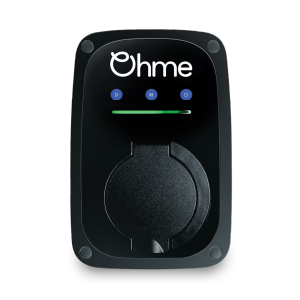
While you can of course charge your vehicle from a standard domestic socket, it will take a long time. The quickest way to charge your vehicle at home is by having a dedicated EV charging point installed. These are also called wallboxes and can give your car around 10 - 30 miles of range per hour.
Wall chargers, like other chargers, do also come in a range of kW, which means they will charge your car differently depending on how high the power rating is. The 7.4kW chargers that we offer charge up to 30 miles of range per hour. So if your electric car is mid-sized you can do a full charge overnight.
How do I get a home charger installed?
We can help you find the right electric vehicle charger for your car, working out what you need and then installing it for you.
You can get more information on what electric vehicle chargers we offer as well as book your installation.
Choose the EV charger to suit you.
The sleek Wallbox Pulsar Max or Vestel EVO4?
Discover our range of chargers and pick the one that suits you and your EV best. They all offer:
The legal bit.
- * Fast charging devices represent 7kW to 22kW source: Residential chargepoints: minimum technical specification Report August 2023 (https://www.gov.uk/guidance/residential-chargepoints-minimum-technical-specification).
- † Voice activation/control and scheduled charging could be achieved using the Wallbox App. The Wallbox App is available through the Apple or Android store. IOS requires iOS 15.0 or later and Android requires Android 8 or later. Geographic and eligibility restrictions apply.